
Why Some VPNs Fail Under Restrictions: IP Blocks, SNI Filtering, and Provider Reputation
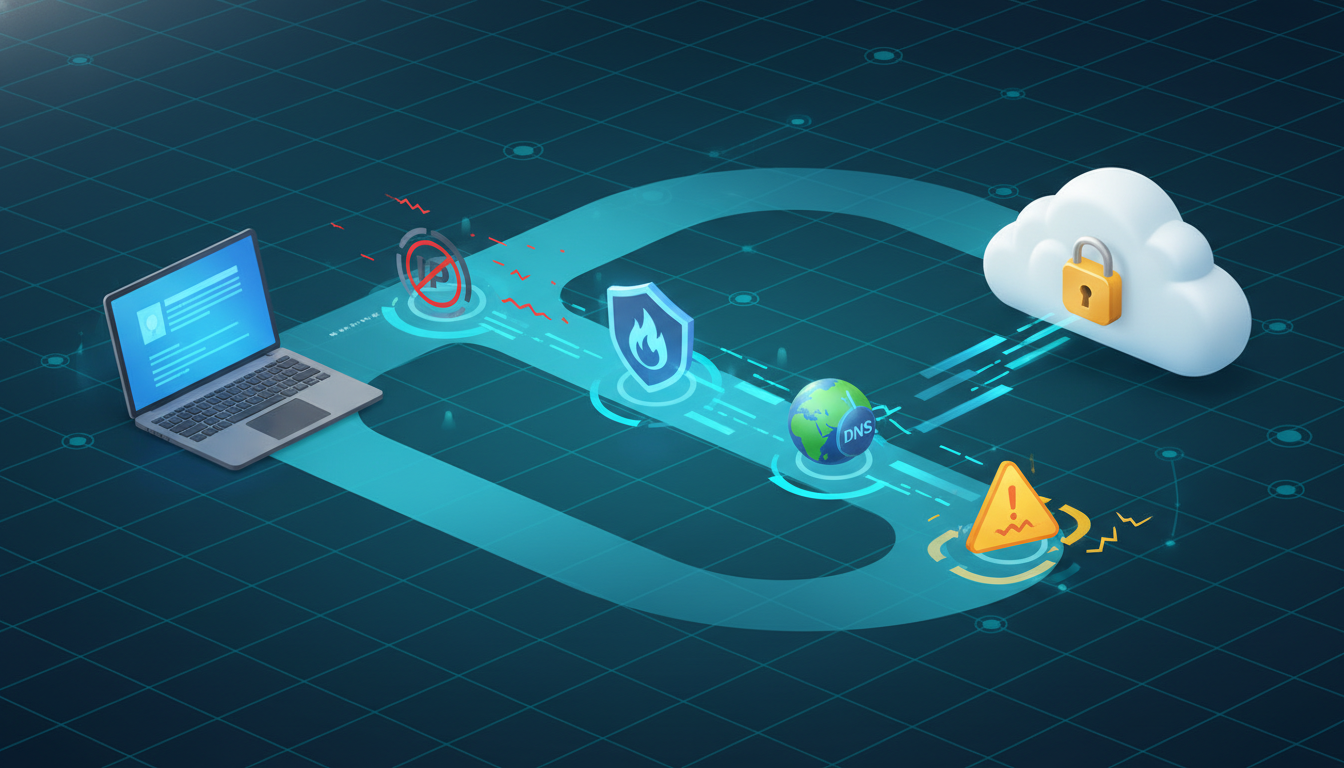
When a VPN “stops working,” most users assume something is wrong with their device. In reality, VPN failures in restricted or controlled networks often have external causes. Networks can limit connectivity through filtering, reputation scoring, and traffic classification— without ever needing to break encryption.
This article explains why VPN connections fail in constrained environments, how restrictions are typically applied, and why two VPN providers can behave very differently under the same conditions.
The most common reason for VPN failure is simple: the server IP gets blocked. Many VPN endpoints are hosted in datacenters and use IP ranges that are easy to identify. Once an IP or subnet becomes associated with heavy VPN traffic, it can be placed on blocklists or treated as suspicious.
IP-based blocks are popular because they are cheap and fast. A network operator does not need advanced inspection capabilities—only a list of IPs. This is why a VPN may work temporarily and then fail later: the endpoint’s reputation changed or it entered a blacklist.
Another major cause is reputation scoring at the ASN level. Instead of blocking individual IPs, networks may restrict traffic coming from hosting providers, cloud infrastructure, or specific ASNs known for proxy or VPN usage. This method is broader and can remove entire “families” of VPN servers at once.
Filtering can also target connection metadata. Even with HTTPS, certain connection traits remain visible. For example, the domain a user intends to visit can sometimes be inferred during the early stages of establishing encrypted connections. These signals can be used to enforce policy without decrypting traffic.
One widely discussed concept in restricted environments is SNI-based filtering. SNI refers to Server Name Indication, which is used in some TLS handshakes to indicate which hostname a client is attempting to reach. If a network monitors this signal, it can block or challenge connections to specific destinations even when the content is encrypted.
From a user perspective, this often looks like random instability: the VPN connects, but certain websites fail. Or the VPN fails to connect entirely depending on the server location. The network is not breaking encryption—it is filtering what happens before encryption fully settles.
DNS handling is another frequent failure point. If DNS requests escape the tunnel or are forced through a resolver controlled by the network, connections may appear broken or partially functional. Users experience timeouts, loading errors, or redirect loops without realizing DNS is the cause.
Some networks apply throttling rather than outright blocking. Instead of stopping VPN traffic, they reduce its speed, add delays, or trigger frequent interruptions. This makes VPN usage frustrating and unreliable while avoiding obvious “blocking” behavior.
Provider infrastructure quality is also a deciding factor. A large provider with diverse server networks and strong traffic engineering can rotate endpoints, manage capacity, and respond quickly to restrictions. A smaller provider with limited infrastructure may fail more often simply because it has fewer clean IP ranges and fewer routing options.
Another factor is how predictable a VPN protocol looks on the wire. Some connections are easier to classify due to handshake fingerprints and flow patterns. If a network uses DPI classification tools, it can flag certain patterns as VPN-like and apply restrictions automatically.
This is why VPN reliability under restrictions is rarely solved by “one setting.” Failures are usually caused by a mix of IP reputation, filtering rules, DNS behavior, and provider engineering decisions.
A realistic expectation is that restrictions are dynamic. Networks change rules. Endpoints get flagged. Traffic patterns evolve. A VPN that works today may require adjustments tomorrow—not because it is weak, but because the environment changes.
For users who rely on VPNs for lawful privacy, the safest approach is not to chase unrealistic stealth. Instead, understand why failures happen and choose providers that invest in infrastructure, transparency, and resilient network engineering.
Privacy is not only about encryption. It is also about reliability, consistency, and minimizing exposure of signals that lead to classification. When VPNs fail under restrictions, the root cause is usually detection and policy—not weak cryptography.
Disclaimer: This article is for educational purposes only and discusses lawful, responsible privacy technology concepts. It does not provide instructions for bypassing restrictions or violating laws or terms of service.