DNS, IPv6, and Leak Risks in Restricted Networks
Many VPN users focus on one thing: whether their IP address looks different. That is an important signal, but it is not the entire privacy story. In real-world environments—especially restricted or controlled networks—privacy often breaks down through leaks.
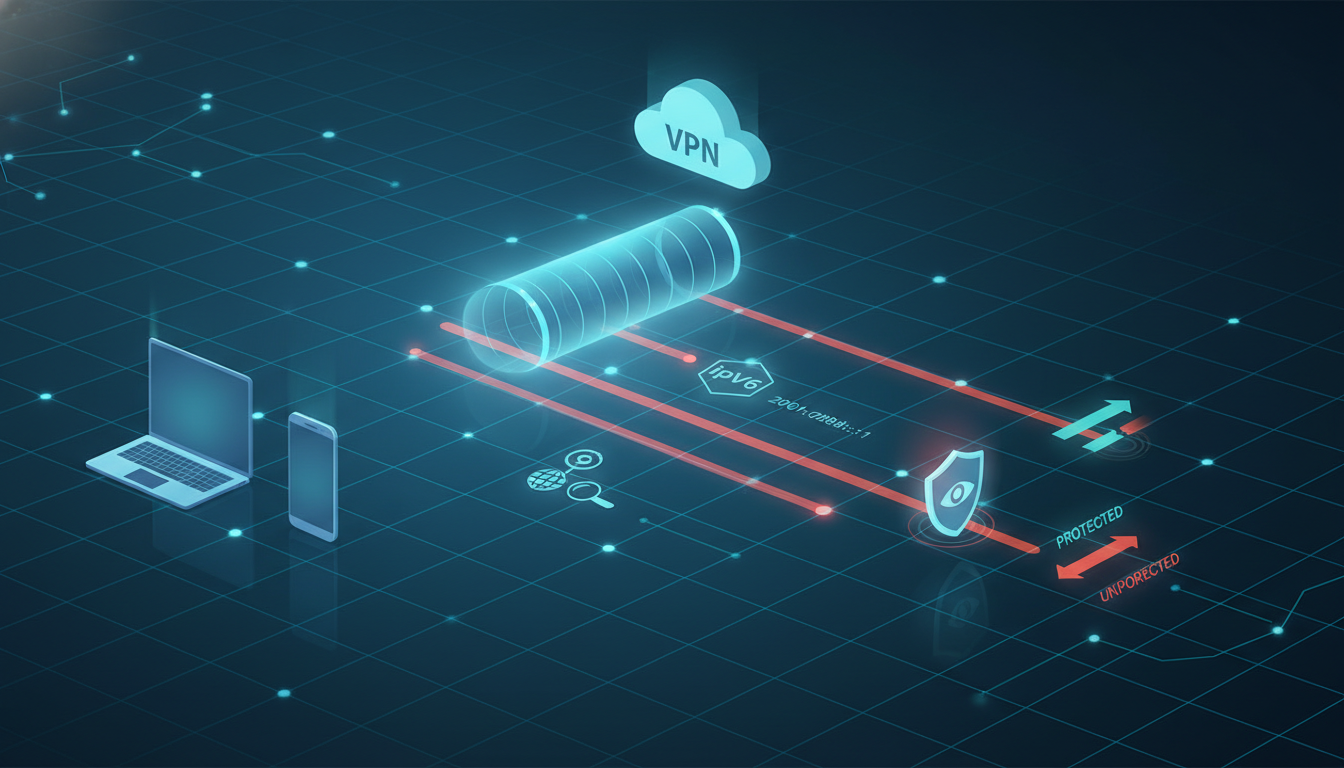
A “leak” does not mean your VPN encryption failed. It usually means certain types of traffic escaped the protected tunnel. This can expose metadata such as visited domains, real network details, or routing behavior, even while the main connection appears protected.
The most common privacy failure is a DNS leak. DNS is the system that translates website names into IP addresses. If DNS requests are routed outside the VPN tunnel, a network observer may still see which domains you access, even when everything else is encrypted.
DNS leaks are often invisible to users. Websites still load, apps still work, and the VPN client shows “connected.” But in the background, domain resolution happens through the ISP or local network resolver, creating a strong correlation signal.
Another frequently overlooked factor is IPv6. Many VPN services handle IPv4 well but treat IPv6 inconsistently depending on their architecture. If a device has IPv6 connectivity and the VPN does not fully route IPv6 traffic, some connections may bypass the tunnel.
When IPv6 leaks occur, the user may appear protected under IPv4, while parts of their traffic still travel outside the VPN. This creates a privacy split: one identity inside the tunnel, another outside it. For tracking systems, that inconsistency is often useful.
Split tunneling introduces another layer of risk. Split tunneling allows certain apps or destinations to bypass the VPN intentionally, while others remain protected. This feature exists for practical reasons, such as local network access or performance. But privacy-wise, it can create unintended exposure.
The danger with split tunneling is not the feature itself, but the assumptions users make. If you believe “the VPN is on,” you may treat all traffic as protected. In split tunneling mode, that is no longer true. Some traffic leaves the tunnel by design.
This matters more in restricted environments because networks often rely on correlation. If one application leaks DNS or IPv6 information outside the tunnel, it can help link other encrypted activity back to a real network identity. In other words, small leaks can undo big protections.
Leaks can also happen during network transitions. Switching between Wi-Fi and mobile data may briefly reset routing tables, trigger DNS fallback behavior, or disrupt tunnel stability. For users, this looks like momentary instability. For tracking systems, it can generate useful identification signals.
Another factor is local DNS enforcement. Some networks redirect DNS queries regardless of user settings. This can cause DNS-based failures, partial loading, or inconsistent access. It may also create a situation where DNS appears “working,” but privacy is degraded.
It is important to keep expectations realistic. A VPN is a powerful privacy tool, but it is not a guarantee of zero exposure. Strong privacy comes from reducing correlation signals, and leaks are correlation multipliers.
The most effective approach is to treat leak prevention as a core requirement, not a bonus feature. A privacy setup should be evaluated not only by whether it connects, but by whether it consistently routes critical traffic through the intended tunnel.
Users who take privacy seriously should periodically check their environment: DNS behavior, IPv6 handling, and whether any split routing is active. These checks are not about paranoia—they are about avoiding silent failure.
The best privacy setups are predictable and boring. They avoid complex configurations unless necessary. They minimize exceptions. And they reduce the number of pathways where metadata can escape.
In restricted networks, this matters even more. When observers focus on metadata instead of content, DNS and routing signals become high-value indicators. Protecting those signals is a major part of what makes VPN usage effective.
Disclaimer: This article is for educational purposes only and discusses lawful, responsible privacy technology concepts. It does not provide instructions for bypassing restrictions or violating laws or terms of service.