
How VPN Traffic Is Detected: DPI, Fingerprints, and Network Heuristics
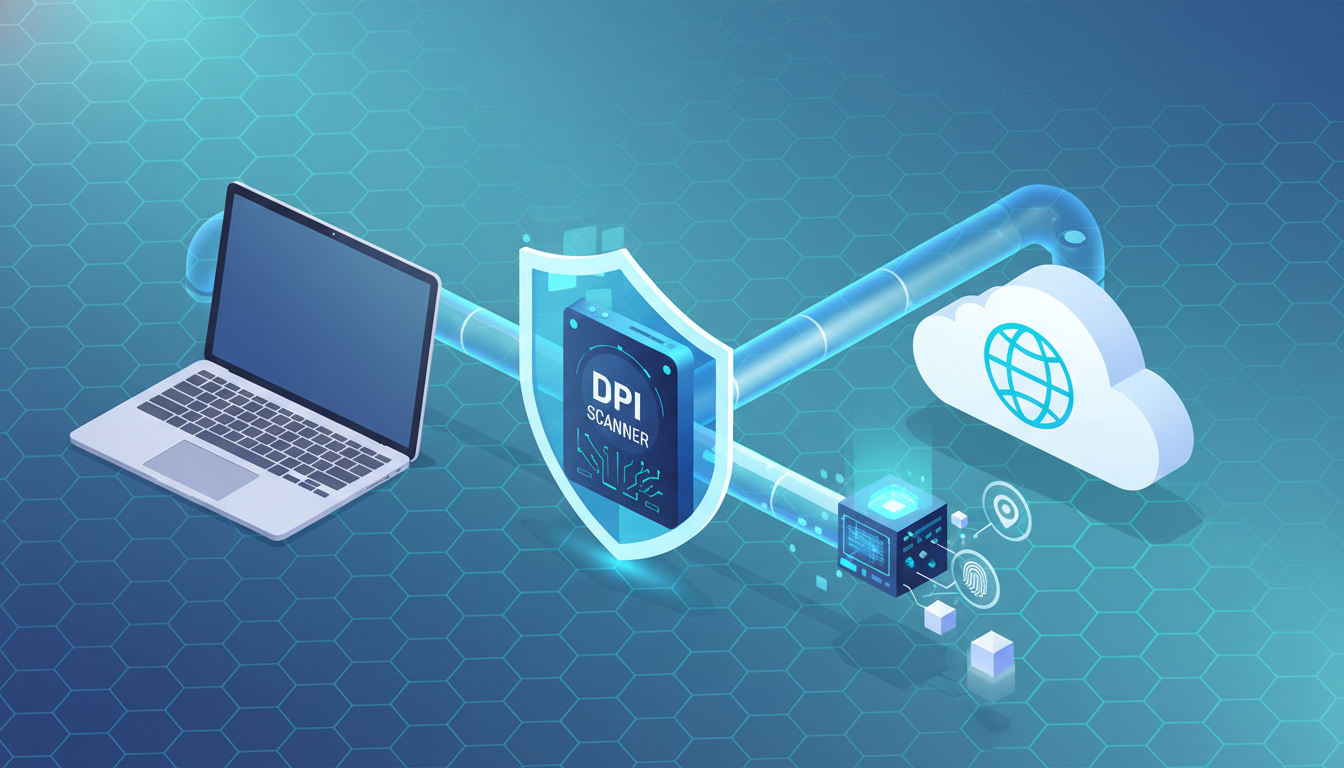
Many people assume that because a VPN encrypts your traffic, it automatically becomes “invisible.” Encryption does protect content from being read in transit, but it does not remove all identifying signals. In restricted or heavily monitored environments, networks often focus less on what data contains and more on what traffic looks like.
This is where detection systems such as Deep Packet Inspection (DPI), protocol fingerprinting, and traffic heuristics come in. They do not need to decrypt your traffic to identify patterns. They only need enough clues to classify it with high confidence.
To understand VPN detection, it helps to separate two ideas: privacy and stealth. A VPN can provide privacy by encrypting traffic content, but stealth requires that traffic blends in with what the network expects to see. Some networks actively search for VPN-related patterns and treat them as suspicious regardless of user intent.
DPI stands for Deep Packet Inspection. Despite the name, DPI does not always mean “reading everything inside your packets.” Modern DPI tools focus on analyzing data flows, metadata, and protocol behaviors. They can classify traffic based on attributes such as handshake structure, header patterns, timing, and connection characteristics.
The easiest detection layer is IP-based blocking. VPN providers operate known server ranges, and many are hosted in datacenters. Networks can blacklist IPs, entire subnets, or even Autonomous System Numbers (ASNs) associated with VPN and hosting infrastructure. This is why some VPN endpoints may work one day and fail the next: the IP reputation changed.
The next layer is port and protocol filtering. Certain protocols often use common ports. A network may restrict or flag traffic based on unusual ports or specific protocol behavior. Even when a VPN uses a standard port, its communication patterns can still stand out from normal web browsing.
One of the most important detection methods is handshake fingerprinting. Most encrypted protocols start with a handshake phase—an exchange that sets up keys and negotiates parameters. Even if the payload becomes fully encrypted after this point, the handshake itself can expose identifying traits.
These traits can include protocol versions, cipher suite preferences, message ordering, and timing signatures. Some detection systems compare observed handshakes to known fingerprints. If they match, the traffic can be classified as a VPN or tunneling protocol with surprisingly high accuracy.
Another common detection method involves analyzing traffic patterns. VPN traffic can have different packet sizes and timing behavior compared to typical web browsing. For example, streaming, continuous tunnels, or long-lived encrypted connections may look different from short, bursty connections to multiple websites.
Network heuristics often focus on what is statistically unusual. If a user suddenly generates a stable encrypted session for long durations with consistent throughput, it can stand out from normal browsing where connections start and stop frequently across many domains.
DNS behavior can also contribute to detection and classification. Even when browsing content is encrypted, domain resolution requests can reveal where a device intends to connect. If DNS requests show one pattern while encrypted tunnels show another, correlation becomes easier. This is one reason privacy discussions often emphasize DNS routing and leak prevention.
In addition to detection, many networks apply risk scoring. The network may not “ban VPNs” in a strict sense, but it can reduce priority, throttle traffic, trigger verification challenges, or block specific high-risk endpoints. This approach is common because it is flexible and can be adjusted without explicit policy statements.
It is also important to recognize that detection does not always require advanced government-grade tooling. Many commercial firewalls and enterprise security appliances include classification modules capable of identifying common tunneling protocols. In corporate settings, detection is often used for compliance rather than censorship.
The key takeaway is that VPN detection is not a single technique. It is usually a layered system combining IP reputation, handshake fingerprints, traffic analysis, and policy enforcement. Even if one layer fails, another may succeed.
This reality explains why some VPN connections can be unstable in restricted environments: the network adapts, the endpoint gets flagged, the protocol pattern becomes recognizable, or reputation changes over time. Encryption stays strong, but classification becomes easier.
For users who rely on VPNs for lawful privacy, the safest mindset is not “how to defeat detection,” but “how to understand what networks measure and why different VPN setups behave differently.” This knowledge helps you choose privacy tools more intelligently and avoid unrealistic expectations.
Ultimately, privacy is not just about hiding content—it is about reducing exposure of signals that allow correlation. In modern networks, what you do may be encrypted, but how you connect can still be visible.
Disclaimer: This article is for educational purposes only and discusses lawful, responsible concepts related to network privacy. It does not provide instructions for bypassing restrictions or violating laws or terms of service.